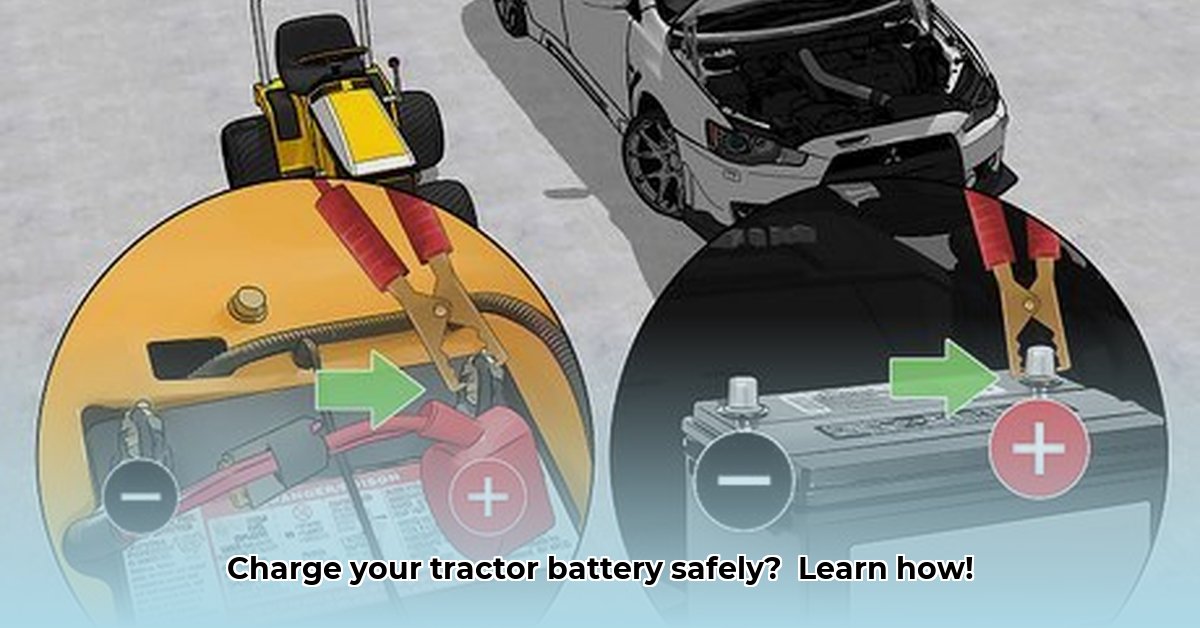
Your tractor's battery is its lifeblood. A dead battery means a stalled tractor, lost productivity, and potential safety hazards. This comprehensive guide provides clear, step-by-step instructions on how to safely and effectively charge your tractor battery, regardless of your experience level. For more information on John Deere battery tractors, check out this helpful resource.
Safety First: Protecting Yourself and Your Equipment
Before you even touch a battery terminal, prioritize safety. Think of it as preparing for any potentially hazardous task – you wouldn't tackle a complex repair without the right tools and precautions. Always wear safety glasses to protect your eyes from corrosive battery acid, and heavy-duty gloves to shield your skin. Insulated tools are essential to prevent electric shocks.
A common question is which terminal to disconnect first, positive (+) or negative (-). While there are different opinions, disconnecting the negative terminal first is generally recommended to safeguard you from accidental short-circuiting. However, consistency is key; choose a method and stick to it each time you work on your battery. Battery acid is corrosive and can cause serious injury; handle with extreme care. Ensure good ventilation while working as battery fumes can be harmful.
Assessing Your Battery: Understanding the Basics
Before charging, identify your battery's key specifications: voltage (12V or 24V) and amp-hour (Ah) rating. The voltage indicates the battery's electrical potential, while the Ah rating signifies its capacity—how long it can deliver power. This information, usually stamped on the battery case, is crucial for selecting the appropriate charger. Using the wrong charger can damage your battery or create a dangerous situation.
Choosing the Right Charger: Matching Your Battery's Needs
Selecting the correct charger is vital. The charger's voltage must match your battery's voltage (12V for a 12V battery, and 24V for a 24V battery). The amperage (A) rating is also key. Higher amperage chargers charge faster but can damage a battery if used improperly, particularly lead-acid batteries. Lower amperage (trickle chargers) are safer for longer charging times and ideal for maintaining a fully charged state. Fast chargers excel for quick recharges but require careful monitoring.
Consider these factors when choosing:
- Battery Type: Lead-acid batteries require gentler charging than AGM (Absorbent Glass Mat) batteries.
- Amperage Rating: A higher amp rating means faster charging, but it also increases the risk of damage if used incorrectly.
- Voltage: This must precisely match your battery's voltage.
Charging Your Tractor Battery: Step-by-Step Instructions
There are two main methods: in-tractor charging and external charging.
Method 1: In-Tractor Charging
- Ensure Safety: Turn off the tractor completely and disconnect the negative terminal first.
- Connect the Charger: Securely attach the charger clamps to the battery terminals (positive to positive, negative to negative).
- Start Charging: Turn on the charger and monitor the charging process. Most chargers have indicators to show the charging progress.
- Complete the Charge: Once fully charged (indicated by the charger), disconnect the clamps, beginning with the negative terminal.
Method 2: External Charging
- Disconnect and Remove: Disconnect the negative terminal first, then the positive. Carefully remove the battery from the tractor.
- Clean Terminals: Clean battery terminals with a wire brush to remove corrosion; this will reduce resistance which can result in low charging.
- Connect the Charger: Connect the charger clamps to the cleaned battery terminals.
- Charge and Monitor: Charge according to the charger's instructions.
- Reinstall: Once fully charged, carefully reinstall the battery, connecting the positive terminal first.
Isn't it faster to charge the battery externally? While this is sometimes true, in-tractor charging is often more convenient. However, external charging offers better access for cleaning and allows more controlled monitoring. The best method depends on your specific situation and comfort level.
Troubleshooting Common Charging Problems
Even with careful attention, problems can arise.
- Charger Not Working: Check power supply, connections, and fuses.
- Slow Charging: Inspect battery connections for corrosion. A faulty battery may require testing or replacement.
- Battery Won't Charge: This often indicates a dead battery needing replacement. A battery load tester can help diagnose this issue.
Battery Maintenance: Extending Your Battery's Lifespan
Regular maintenance drastically improves your tractor battery's lifespan.
- Clean Terminals: Regularly clean terminals with a wire brush and baking soda solution to remove corrosion which can increase resistance and reduce charging efficiency.
- Fluid Level Check (Lead-Acid Only): For lead-acid batteries, check the electrolyte level and add only distilled water if needed. Never overfill.
- Proper Storage: When not in use, store the battery in a cool, dry place to prevent self-discharge and corrosion.
Conclusion: Keeping Your Tractor Running
By diligently following these steps, and understanding the different types of chargers and their purpose, you can ensure your tractor battery remains healthy and ready to power your equipment. Remember that safety is paramount, and regular maintenance is key to maximizing your battery's lifespan. Prioritize safe practices, and your tractor will thank you for it.